PACEQ - A Mental Model for Leading Teams That Actually Deliver
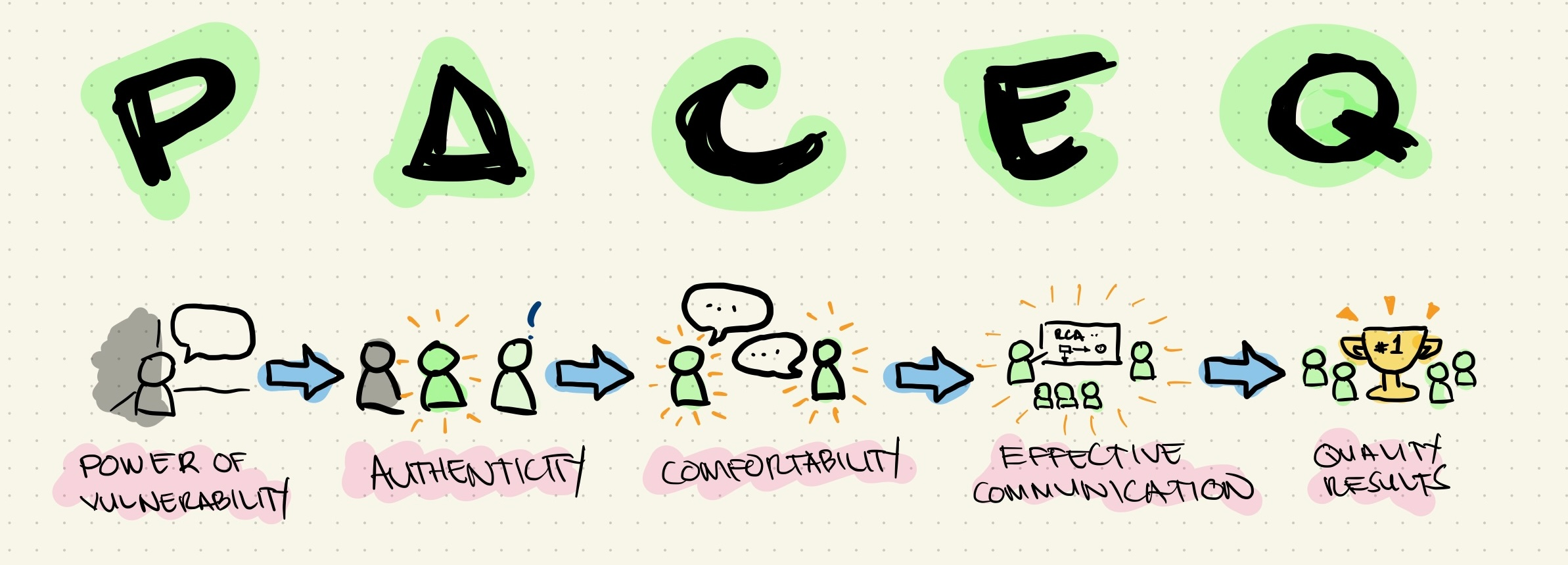
Power of Vulnerability
Before I can be seen as an effective leader, I start by sharing my own experiences, especially failures. Not to overshare, but to signal that it's okay to not have all the answers. Vulnerability creates psychological safety. It tells the team that honesty is valued more than pretending.
For example, when I join a new team, I openly say I'm still learning and ask basic questions in public. This usually encourages others to speak up as well, and hidden blockers surface much earlier.
Authenticity
Vulnerability works only if it's backed by authenticity. People follow consistency, not perfection. If I say it's okay to be blocked, my reaction when someone admits it matters more than the statement itself.
There have been times when a developer told me they didn't know how to approach something. Instead of taking over, I worked through it with them and let them try again. Over time, this builds confidence and reduces dependency.
Comfortability
As vulnerability and authenticity repeat, comfort naturally builds. This is not just about being friendly. It's about creating a space where people feel safe to speak up, even when it's uncomfortable.
In situations where priorities are unclear or communication is fragmented, teams without comfort tend to stay silent. But when comfort exists, someone will call it out early and ask for alignment, preventing bigger issues later.
Effective Communication
Once comfort is present, communication becomes clearer and more useful. Not more meetings, just better signals.
Instead of vague updates, people share real blockers and even suggest solutions. This allows the team to respond faster, make decisions quicker, and reduce unnecessary back and forth.
Quality Results
In software development, good communication directly leads to better results. When someone can simply say, "I'm blocked" or "I don't understand this yet," the team can regroup and move forward together.
I've seen that this leads to faster delivery, fewer surprises, and stronger collaboration. The output improves, but more importantly, the way the team works improves.